Saturday, February 26, 2011

store culture (Jee In Chung)

So have you wondered why every time you walk into any type of a store, either a restaurant or a clothing store, the store people won't stop saying "irashaimase”? At first, I didn't know why the store person was saying it every time a customer walks in or every once in a while because it made me feel uncomfortable. It was as if she wanted me to choose what I wanted to buy or leave the store immediately. Also, while you are just eye shopping, they will say something like "If you would like to try it on, please do not hesitate to ask" and I would just smile because I didn't know what else I could possibly do. After I got more used to living in Japan, I came to realize that Japan considers the Service sector very importantly and that there is a set of long tradition of store culture in Japan. Of course, it depends on what kind of store you go to but most of the times, it is considered that the "customer is the king" in the store. This expression is a bit of an extreme but it stays true in many stores in Japan.
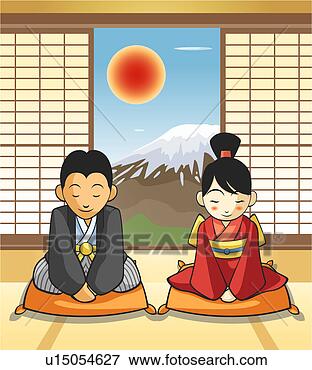
For example, if you purchase a product at a well-known brand store, it will be beautifully wrapped and perfectly even if you tell them that the purchased product is for yourself, not for someone else. Once purchased good is wrapped, the store clerk will guide you all the way to the escalator and hand over the shopping bag. Then, she will bow 90 degree until she can no longer see you anymore. Such behavior can be seen not only when you purchase the product but also when you try on the clothes. Every time you come out of the fitting room, every single staff in the store will say "otsukaresamadeshita" which literally means "cheers for good work". The direct translation in English does seem a bit strange but basically, they are thanking you and congratulating you for trying on the clothes.
Many foreigners find that they feel pressured because of the extreme politeness in Japanese society and I sometimes feel the pressure as well but I think it's just something that you get used to after a while. Thanks to this culture, I find that it's easier for me to shop in Japan because store clerks in Japan tend me be more patient in listening to the requests of the shopper. I think it's a general characteristic that Japanese people have. They are extremely kind when I ask for directions on the street and some are actually sorry to not be able to help me out sometimes. In a busy city like Tokyo, this kind of reaction is not something that I was expecting.
Knowing English, I always felt that I would be able to communicate wherever I go without going through troubles but I realized that I was totally wrong when I came to Japan. It's very difficult to live in Japan without knowing the language and it is important that you have the motivation to learn the language while living here. Although, I am at a conversational level in Japanese, being able to read all the Kanji in public is another challenge. But it is for sure that Japanese people are more than willing to help you out even if you are just a stranger to them in stores or on the street. So don't be afraid and be bold!

When you are sick (Jee In Chung)

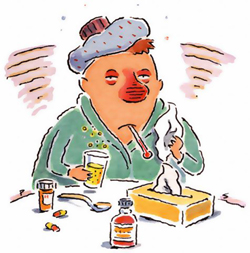
Coming to a new country where everything is completely new and different, things can get quite difficult at times, especially when you aren't feeling good and may feel sick. Because of difficult kanji, it's even difficult to understand the labels on medication boxes. Although you should really have some back-up emergency medication with you from your home country at all times, I will recommend the best-selling drugs in Japan for common sickness such as stomaches, muscle pain, headaches, bug bites and so on.
The first that I will introduce is [大証 Hanban] which works for digestive stomach medicine. You do not need prescription for this medicine. This medicine is also good for sour stomach and for hangovers. It is known to have no side effects because it's composed of different types of herbs such as ginger and Cinnamomum cassia Blume. [Otawisan] is also well-known to cure such illness. A lot of the times, it is preserved in a small can so you can scoop up as much as you think you would need according to its symptoms.
It can get pretty cold in the winter in Japan so you can easily see many people wearing white mouth masks. These masks are sold at any convenience store for couple hundred yen. If you feel that you have early symptoms of cold, I would recommend [sekidome sekin] which immediately gets rid of mucus in your system. It will heal your swollen throat and it's good for coughs and pain.
In the summer, Japanese mosquitoes are the scariest things you would want to stay away from but unfortunately, they are not avoidable. It's important not to irritate by itching it. If you planning to go on a camp during the summer, make sure you take [Ekutai muhi S]. It only works for other bug bites as well, not just the mosquitoes. You will feel the comfort feeling of coolness on your skin immediately as you apply it on your skin. When you have muscle aches on your legs or shoulder after camping, it would be a good idea to apply [saromechil FB loshon]. This comes in two types of forms. It comes in tape wrapping form and the second in gel type.
Although medication may not be your concern at the time being, it is important to have them ready at all times. However, these medications recommended above are all non-prescription medications. If you have severe symptoms of sickness, it would be best to go and see a doctor with your alien registration and national healthcare card.

Mcdonalds in Japan Part 2 (Jee In Chung)

So how can Macdonalds in Japan be so successful? First of all, it has a very hygienic atmosphere so when you walk into Macdonalds, you will not put on a frown on your face and pinch your nose due to the foul smell. Instead, you will be welcomed by the smiles of the workers with the delicious smell of French fries (in Japan, they call it potato). The tables and chairs are arranged and wiped every time a customer leaves.
Secondly, Macdonalds has a promotion for a new kind of burger starting in November. This promotion consists of four types of burgers which rotate every week. They are called Texas burger, Idaho burger, Miami burger and Manhattan burger. Because of its rotation, people are more curious as to trying out the new tastes of the burgers before they are too late! This, I believe, is one of the reasons why you see such a long line up at every Macdonalds. I have tried all three burgers except the Texas burger which I hear is the best one according to my friends. This is why I’m waiting for the weeks to rotate to try it out. It may seem like it’s not really worthwhile to keep track of the weeks to try out the burgers. But I think this rotation of selection of burgers have definitely played an important role in allowing people to have more interest in what Macdonalds is doing with its business and how fast the menu is changing . There are more to the menu change other than these four burgers. The changes are with drinks, chicken nuggets and desserts. Also, there is a burger named Terriyaki burger which is a burger with Japanese teriyaki sauce. This burger can be found only in Japan because it’s Japanese edition.
Thirdly, unlike Canada and America the number of Mcdonald stores are growing every month because of its popularity; therefore, you are constantly exposed to Macdonald flyers, posters and advertisements everyday so you will be more likely to try it out. Also, every time you visit and order something in Mcdonalds, you will receive some sort of discount coupon so this also motivates to return to their stores.
Lastly, if you are short on budget, trust the 100 yen menu at Macdonalds. You can easily see junior school students munching away their chicken nuggets or apple pie which is on the 100 yen menu.  On the 100 yen menu, there are burgers, chicken nuggests, drinks and desserts and they are quite filling.
So ever since coming to Japan, my perception of Macdonalds has changed a lot and actually started to admire how the business game has been working quite successfully in Japan. It is a comfortable place to hang out with your friends and enjoy a burger and fries from time to time. I wouldn’t recommend going to Mcdonalds every day for every single meal but it’s not so bad to have some once a week, right?


Mcdonalds in Japan Part 1 (Jee In Chung)


How often do you go to Mcdonalds these days in your own country? What kind of image do you have in your mind when someone says Mcdonalds. I remember when I was living in Canada during my elementary school years, I used to go to Mcdonalds drive thru almost every day after school to grab either a Happy Meal or chicken nuggets. Collecting the monthly toys in my Happy Meal set was the highlight of my young years. But as I entered to middle school and on to high school, I went to Mcdonalds less and less. Although I cannot give a clear reason why, Macdonalds started to give off unsanitary image for the public either in forms of books or movies. For example, “Supersize me” (2004) which was directed by Morgan Spurlock displayed how unhealthy Mcdonalds was and how it could seriously harm an individual’s life. I’ve never seen the movie myself but I do remember how much it was advertised in Canada and what an issue it was for everyone with the boom of fast food. By the time I moved to New York for my college, I didn’t even think about going to McDonalds.
When I arrived in Japan for a one-year change at Waseda, I found myself going to Mcdonalds at least once a week. I was surprised when I first realized this and I started to see why. The kind of image Mcdonalds has in Japan is very different from the ones in Canada or the United States. It is the most popular place for the junior school and high school students because of its relatively cheap price. The tables and seats are extremely clean and the workers are cleanly dressed. The workers treat each customer very politely with smiles on their faces. The attitude of the workers is warm, kind and welcoming. This is not a sight you can see elsewhere.

Kusuri (Jee In Chung)

I remember my first time at a supermarket looking for a hair conditioner but no matter, how hard I looked, I couldn't find the Body Soap section. With my poor Japanese skills, I decided to ask the clerk where it was. After saying the word "conditioner" five times, the clerk still didn't seem to get what I was saying. It was only later when she was trying to tell me that I should go to a pharmacy ("KUSURI") to look for the hair conditioner. That was when I realized that Japan had a different concept of supermarket than the ones in Korea.
In Korea, what we call a supermarket has from food to bathroom wares. But at drug stores, only drugs are sold. So it's possible to do any type of shopping, either grocery or household, at supermarket. However, in Japan it's different. While supermarket only contains products related to food, kusuri carries from medicine to cosmetic products. I’ve seen this type of system in America and Canada but seeing Japan as an Asian country I automatically assumed that it would have a system similar to the one in Korea.
Kusuri is rather a fun place to go once in a while because of the variety of goods they have in the stores. The stores are extremely well-organized. Every time I go, I check out their make-up section because Japanese make-up products tend me work better on Asian skin as opposed to other European or American brands. There are more than thirty brands and each of them have a tester and a catalog for the customers to read. The bestseller is marked with a sticker of a crown and you will not regret trying out one of those. Because most of them are written in Kanji and very little English, I tend to look for the ones with the crown sticker. The price is reasonable and the products are in quite good quality. For example, cosmetic companies such as Shiseido or Shu Uemura are internationally well-known and its cost is quite high. So Shiseido have created many smaller branches like Shiseido maquillage which targets young ladies with lower price but still fairly good quality. Because people know which brands are under Shiseido, they feel the cosmetic products are more likely to be reliable and trustworthy.
Another section I was surprised to see was the vitamin drink section which is composed of more than 30 different company brands. I used to intake Redbull every time I was trying to pull an all-nighter but the use for these drinks are many. Some drink them before going to nomikai or nomihodai to prevent from getting a headache the next day; others drink them to get an energy booster throughout a tough day. I tried out some of these drinks thinking that they would taste like medicine but they tasted delicious and they actually worked on me. As you are probably already aware, Japanese people love drinking at Izakayas so I would definitely recommend you to take one of these drinks before going to a nomikai (drinking event).

Keigo (Jee In Chung)

When I first arrived in Japan, every time I visited small shops, convenience stores or big department stores, I sensed that the clerks were using a different form of Japanese language to me than the ones I used with my classmates or friends. Although they seemed like they were implying the same meanings, different types of words were being used. This had really confused me at first because I have never learned in it my Japanese textbooks. As I got into higher level of Japanese classes, I realized that depending on the situation, Japanese people use “Keigo” () which in direct translation is “Honorific speech in Japanese”. The use of “Keigo”() was to show respect to elders or guests in many social situations. Because I’m from South Korea and we have a similar type of speech like “Keigo”, the concept was relatively easy to understand; However, learning and memorizing “Keigo” was a rather difficult step.
            Although it is not required for the okyakusama (guest) to speak to the clerk in Keigo, there is no reason why I couldn’t try practicing with them. So when I first arrived to Waseda University, I decided to take the optional class of Beginners Keigo. Because the concept was rather similar to Korean keigo, I thought that I would have an easier time understand and studying keigo compared to other English speaking students. But I was wrong. Japanese Keigo turned out to be much more complicated. It is composed in three types which are sonkeigo (尊敬語), respectful language; kenjōgo (謙譲語), humble language (or "modest language") and teineigo (丁寧語), polite language.
            In my daily life, sonkeigo (尊敬語) is used the most in shops or stores. sonkeigo (尊敬語) is used when talking about superiors or customers. It cannot be used when talking about oneself. So for an example, if I enter a coffee shop and order a bagel, the worker will ask me whether I will eat the bagel right away or if it’s for to go. The worker will use the word召しあがる meshi-agaru instead of saying食べる taberu (to eat).  Because I don’t plan to work in Japan, it is not crucial for me to master the use of sonkeigo (尊敬語); however it is essential for me to understand what is being said because it is used constantly around me in shops or stores.
            I tend to use kenjōgo (謙譲語) more than sonkeigo (尊敬語). In direct translation kenjōgo (謙譲語) means “Humble lanugauge” and it is used to lower my own position rather than lifting up the others’ like Sonkeigo. So for an example, when I was invited to a friends’ house for Christmas dinner, before eating, I said itadakimasu (いただきます) which is a well-used phrase in Japan before eating or drinking.
            Keigo can be a rather difficult concept to grasp when first coming to Japan because it is such a unique form of language. Also, it is a form of language one will natural be able to grasp because of its frequent use in public. Japanese people also start studying the use of Keigo when they start job-hunting in their junior or senior year because the role of Keigo is extremely important and strict in business settings. In schools, Keigo is not very often used.

Tuesday, February 1, 2011